Flood and Climate Risk: Aotearoa New Zealand and Australia – Economic Growth, Limits, and Systemic Overshoot
In Aotearoa New Zealand, new data indicate that roughly 750,000 people—about 15% of the population—are currently exposed to major rainfall or river‑flooding events under present conditions. RNZ article
Image placeholder: NZ flood map (URL to add: https://www.earthsciences.nz/assets/GIS-Tool-screenshot-web__ResizedImageWzYwMCwzNTBd.jpg)
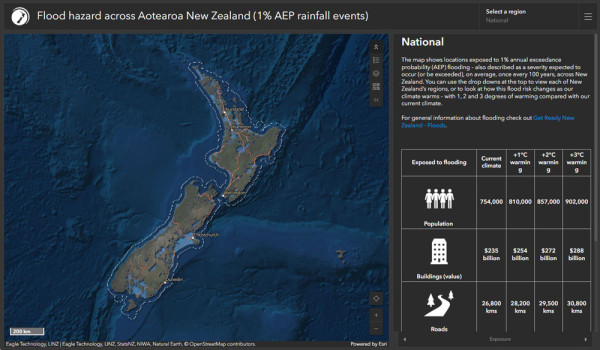
Meanwhile, Australia’s National Climate Risk Assessment (2025) presents a wide‑ranging picture: hazards including floods, heatwaves, sea‑level rise, coastal inundation and infrastructure breakdown are analysed across multiple systems—communities, economy/trade/finance, health & social support, infrastructure, natural environment, primary industries and more. Australian NCRA
Image placeholder: Australia flood chart (URL to add: https://images.theconversation.com/files/198498/original/file-20171211-27719-7y214t.jpg?auto=format&fit=clip)

These data from neighbouring countries reveal a consistent pattern: hazard exposure is already significant, and climate‑driven change will make risk zones larger and more severe. The predominant policy assumption—that economic growth will continue unabated and provide both resilience and prosperity—begins to fray.
Governments and corporations often assume that economic growth can continue largely independently of environmental limits. However, many of the activities that drive growth also increase hazard exposure. Australia's assessment shows that the cost of hazards is increasing faster than economic activity. Extreme weather events are already costing the economy heavily, and losses scale non‑linearly under higher warming. The Guardian summary
Within the planetary‑boundaries framework, these data illustrate overshoot. Once systems exceed their buffering capacity, non‑linear effects appear—hazards intensify, recovery costs rise. Growth models assume linear expansion, but natural systems do not behave linearly once thresholds are breached.
A new method of economic incentives is required: investment should shift from throughput‑based growth toward restoration and maintaining life‑support systems. Incentives should reward practices that reduce hazard exposure and incorporate ecological losses as liabilities, not externalities.
The data from Aotearoa New Zealand and Australia expose the gap between what growth‑oriented policies promise and what hazard realities deliver. Growth that ignores ecological limits becomes self‑undermining. Transitioning to an economy oriented around restoration, resilience and shared well‑being demands rethinking incentives and metrics.
Comments
Post a Comment